
Mobile app development life cycle is the cornerstone of creating high-quality applications that users love and businesses depend on. This systematic approach plays a critical role in determining overall quality and success. In today’s competitive digital landscape, understanding how each development phase impacts the final product is essential for businesses and developers aiming to create exceptional user experiences.
Understanding the Development Process
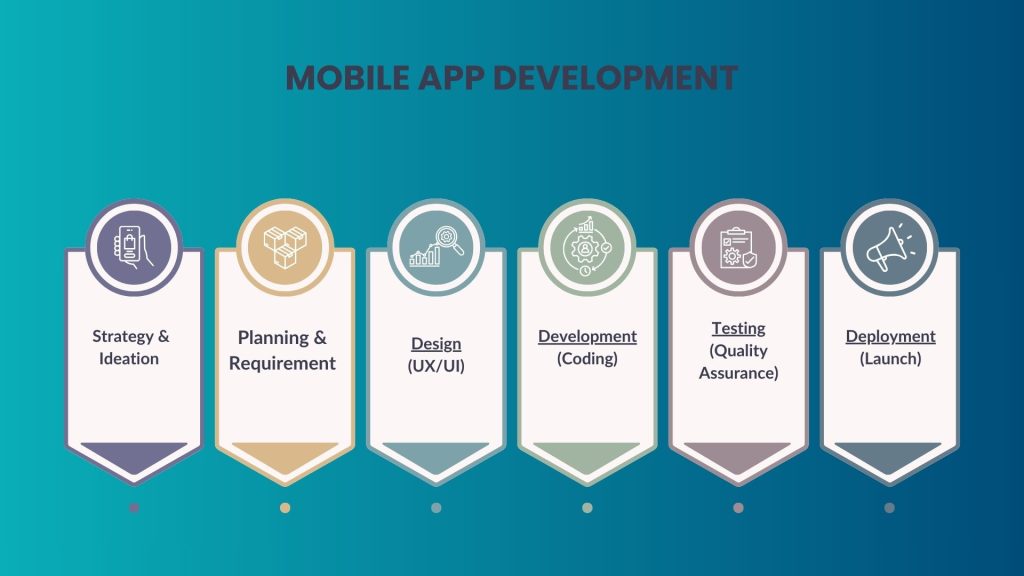
The systematic process guides developers from initial concept to final deployment and beyond. This structured approach ensures that quality considerations are embedded at every stage, rather than being an afterthought. The typical lifecycle includes planning, design, development, testing, deployment, and maintenance phases, each contributing uniquely to application quality.
Quality in mobile applications extends beyond mere functionality. It encompasses user experience, performance, security, scalability, and maintainability. Decisions made during each phase directly influence these quality attributes, making it imperative to adopt a holistic approach throughout the entire process.
According to Gartner’s research on mobile development organizations that follow structured methodologies achieve 40% higher success rates in their projects.
Key Factors Influencing Mobile App Quality
1. Requirements Analysis and Planning
The foundation of quality apps begins with thorough requirements analysis. During this initial phase, teams must clearly define user needs, business objectives, and technical specifications. Poor requirement gathering leads to feature creep, misaligned expectations, and ultimately, applications that fail to meet user needs.
Successful planning involves stakeholder interviews, market research, competitive analysis, and creating detailed user personas. These activities help teams understand what quality means for their specific target audience. For instance, a banking application prioritizes security and reliability, while a gaming app focuses on performance and engaging user interfaces.
The Project Management Institute emphasizes that proper requirements gathering reduces project failures by up to 50%. Learn more about requirements to strengthen your development process.
2. User-Centric Design Approach
Design quality significantly impacts user satisfaction and retention rates. The design phase must prioritize intuitive navigation, visual consistency, and accessibility. Applications that neglect design principles often suffer from poor user adoption, regardless of their technical sophistication.
Research from the Nielsen Norman Group consistently demonstrates that user-centered design practices dramatically improve application quality. Wireframing, prototyping, and conducting usability testing before full development saves resources and ensures the final product aligns with user expectations.
3. Architecture and Technology Stack Selection
Technical decisions made during the architecture planning phase of the mobile app development life cycle have long-lasting implications for app quality. Choosing between native, hybrid, or cross-platform development approaches affects performance, user experience, and maintenance complexity throughout the entire mobile app development life cycle.
Native applications generally offer superior performance and better integration with device features, while cross-platform solutions provide faster time-to-market and reduced development costs. The optimal choice depends on specific project requirements, target audience, budget constraints, and long-term maintenance considerations within your mobile app development life cycle.
Development Phase Quality Factors
4. Code Quality and Standards
Writing clean, maintainable code is fundamental to application quality within the mobile app development life cycle. Adherence to coding standards, implementation of design patterns, and regular code reviews prevent technical debt accumulation. Poor code quality leads to bugs, performance issues, and difficulties in future enhancements.
Successful development teams establish coding guidelines, utilize version control systems, and implement continuous integration practices during their mobile app development life cycle. These measures ensure consistency across the codebase and facilitate collaboration among team members, ultimately contributing to higher quality applications.
5. Performance Optimization
Performance directly influences user satisfaction and app store ratings throughout the mobile app development life cycle. Development teams must optimize loading times, minimize battery consumption, and ensure smooth animations. Applications that lag, crash, or drain device resources quickly lose users to competitors.
According to Google’s research on mobile performance, even one-second delays in load time can significantly impact conversion rates and user engagement. This makes performance optimization a critical component of every mobile app development life cycle.
6. Security Implementation
Security cannot be an afterthought in the mobile app development life cycle. Implementing robust authentication mechanisms, encrypting sensitive data, and following platform-specific security guidelines protects both users and businesses from potential vulnerabilities. Security breaches damage reputation and erode user trust permanently.
Quality applications incorporate security best practices from the earliest development stages of the mobile app development life cycle, including secure coding practices, regular security audits, and compliance with industry standards like OWASP Mobile Top 10.
Testing and Quality Assurance
7. Comprehensive Testing Strategies
The testing phase is arguably the most critical quality determinant in the mobile app development life cycle. Comprehensive testing strategies should include functional testing, usability testing, performance testing, security testing, and compatibility testing across various devices and operating system versions.
Automated testing frameworks accelerate the testing process and improve consistency, while manual testing uncovers usability issues that automated scripts might miss. Quality applications undergo multiple testing iterations within the mobile app development life cycle, with teams addressing identified issues before proceeding to deployment stages.
Device and Platform Fragmentation Challenges
Android and iOS ecosystems present unique challenges due to device fragmentation in the mobile app development life cycle. Development must account for testing across different screen sizes, resolutions, hardware capabilities, and operating system versions. Applications that work flawlessly on flagship devices may encounter issues on older or budget models.
Utilizing cloud-based testing platforms helps teams ensure quality across the widest possible user base during the mobile app development life cycle. Prioritizing testing on the most popular devices while sampling edge cases creates a balanced approach to quality assurance within resource constraints.
Beta Testing and User Feedback
Incorporating real user feedback through beta testing programs provides invaluable insights during the mobile app development life cycle. Beta testers identify issues that internal teams might overlook and provide perspectives on usability and feature relevance that improve overall application quality.
Platforms like TestFlight for iOS and Google Play Console’s internal testing tracks facilitate structured beta testing programs. Analyzing user feedback, crash reports, and usage analytics during this phase of the mobile app development life cycle allows teams to refine applications before public release, significantly enhancing launch quality.
Post-Deployment Quality Maintenance
Continuous Monitoring and Analytics
Quality management extends beyond initial release in the mobile app development life cycle. Implementing analytics tools and crash reporting systems enables teams to monitor application performance in real-world conditions. Identifying patterns in user behavior, performance bottlenecks, and error frequencies guides improvement priorities.
Tools like Firebase Analytics, Mixpanel, and Crashlytics provide comprehensive insights into application health and user engagement. Regular review of these metrics ensures that quality standards are maintained throughout the mobile app development life cycle and declining performance indicators trigger corrective actions promptly.
Regular Updates and Maintenance
The mobile app development life cycle doesn’t end at deployment. Quality applications require ongoing maintenance, bug fixes, and feature enhancements to remain competitive and meet evolving user expectations. Operating system updates, changing security standards, and emerging user needs necessitate continuous development efforts.
According to research from Statista, users expect regular updates and quickly abandon applications that appear neglected. Establishing maintenance schedules, monitoring app store reviews, and staying current with platform guidelines ensures sustained quality throughout the mobile app development life cycle.
Discover maintenance strategies that extend the value of your development investment.
Scalability Considerations
Planning for growth during the mobile app development life cycle prevents quality degradation as user bases expand. Scalable architectures, efficient database designs, and cloud infrastructure considerations ensure applications maintain performance standards under increasing loads. Applications that succeed initially but fail during rapid growth disappoint users and damage brand reputation.
Best Practices for Ensuring Quality
Agile Methodology Integration
Adopting agile development practices enhances quality in the mobile app development life cycle by enabling iterative improvements and rapid response to changing requirements. Sprint-based development, regular retrospectives, and continuous stakeholder engagement create opportunities for quality refinement.
Agile approaches facilitate early detection of quality issues, allowing teams to address problems before they become deeply embedded in the codebase during the mobile app development life cycle. This iterative quality focus reduces the risk of major rework and ensures alignment between development outcomes and stakeholder expectations.
Cross-Functional Collaboration
Quality in the mobile app development life cycle benefits from collaboration between designers, developers, testers, and business stakeholders. Breaking down silos and fostering communication ensures that quality considerations inform decisions at every stage, rather than being isolated to specific phases.
Regular standup meetings, shared documentation, and collaborative tools facilitate this cross-functional approach throughout the mobile app development life cycle. When all team members understand quality objectives and contribute to their achievement, resulting applications consistently exceed standards.
Documentation and Knowledge Management
Comprehensive documentation supports quality maintenance throughout the mobile app development life cycle and beyond. Technical documentation, API references, user guides, and architectural decision records enable team continuity and facilitate troubleshooting when issues arise.
Quality documentation practices also support onboarding new team members, enable efficient knowledge transfer, and provide historical context for technical decisions made during the mobile app development life cycle. Applications with well-maintained documentation experience fewer quality regressions and smoother evolution over time.
Common Pitfalls That Compromise Quality
Rushing the Development Process
Time pressure is one of the most significant threats to quality in the mobile app development life cycle. Rushing through planning, skipping testing phases, or cutting corners during development inevitably produces substandard applications. While market timing matters, releasing poor quality applications damages reputation more severely than delayed launches.
Balancing speed with quality requires realistic project planning, prioritizing core features over nice-to-haves, and resisting pressure to compromise fundamental quality standards within your mobile app development life cycle.
Neglecting Platform-Specific Guidelines
Each mobile platform maintains design and development guidelines that influence user expectations throughout the mobile app development life cycle. Applications that ignore iOS Human Interface Guidelines or Android Material Design principles feel foreign to users and receive lower quality ratings.
Studying platform documentation, reviewing exemplar applications, and conducting platform-specific testing ensures compliance with ecosystem standards. This attention to platform conventions significantly enhances perceived quality and user satisfaction during the mobile app development life cycle.
Inadequate Resource Allocation
Under-resourcing any development phase compromises overall quality in the mobile app development life cycle. Insufficient budget for user research, inadequate testing resources, or understaffed maintenance teams create quality gaps that impact user satisfaction and business outcomes.
Proper resource allocation requires realistic budgeting, appropriate team sizing, and recognition that quality investments yield returns through improved retention, positive reviews, and reduced support costs. Organizations that view quality as an expense rather than an investment consistently produce inferior results in their mobile app development life cycle.
Consult our project budgeting guide to properly resource your projects.
Measuring Success: Quality Metrics
Key Performance Indicators
Quantifying quality throughout the mobile app development life cycle enables objective assessment and continuous improvement. Important metrics include crash rate, application load time, user retention rates, app store ratings, and customer satisfaction scores. Tracking these indicators provides insights into quality trends and highlights areas requiring attention.
Establishing baseline measurements and setting improvement targets creates accountability for quality outcomes in your mobile app development life cycle. Regular review of quality metrics should inform development priorities and resource allocation decisions.
User Feedback and Reviews
App store reviews and user feedback represent direct quality assessments from the target audience throughout the mobile app development life cycle. Monitoring review trends, analyzing common complaints, and responding to user concerns demonstrates commitment to quality and provides valuable improvement guidance.
Systematic review analysis, categorizing feedback themes, and prioritizing issues based on frequency and impact helps teams address the most significant quality concerns efficiently during the mobile app development life cycle. Applications that actively incorporate user feedback into ongoing development consistently maintain higher quality standards.
Future Trends in Quality Assurance
The mobile app development life cycle continues evolving with emerging technologies like AI-powered testing, progressive web applications, and low-code platforms. Staying informed about industry trends through resources like Mobile World Live, TechCrunch Apps, and Forrester’s mobile insights ensures your development processes remain competitive.
Artificial intelligence and machine learning are revolutionizing testing methodologies within the mobile app development life cycle, enabling predictive analytics and automated bug detection. Mobile App Daily tracks emerging trends shaping the industry.
Conclusion
A well-structured mobile app development life cycle fundamentally shapes application quality through interconnected phases that each contribute essential quality attributes. From initial requirements analysis through ongoing maintenance, every decision in the mobile app development life cycle impacts user experience, performance, security, and long-term viability.
Organizations that recognize quality as a continuous commitment rather than a single checkpoint create applications that delight users, achieve business objectives, and sustain competitive advantages. By implementing structured development processes, embracing best practices throughout the mobile app development life cycle, and maintaining vigilance throughout the lifecycle, teams can consistently deliver exceptional mobile experiences.
Success in today’s mobile ecosystem demands excellence across all quality dimensions. The mobile app development life cycle provides the framework for achieving this excellence, but realizing its potential requires dedicated effort, appropriate resources, and unwavering commitment to user-centric quality standards. Applications built on these principles not only survive but thrive in an increasingly competitive marketplace.
Ready to optimize your development process? Contact us for personalized guidance on building high-quality mobile applications.